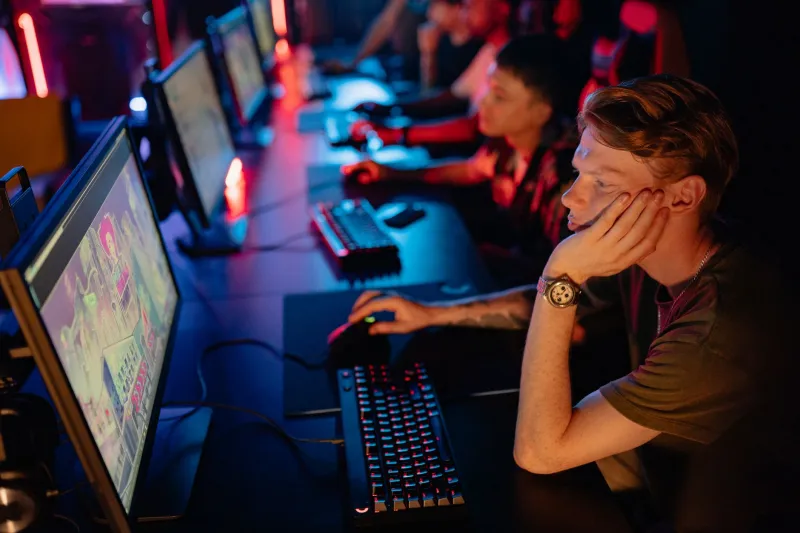
Your $400 Mouse Isn't the Problem. You Are.
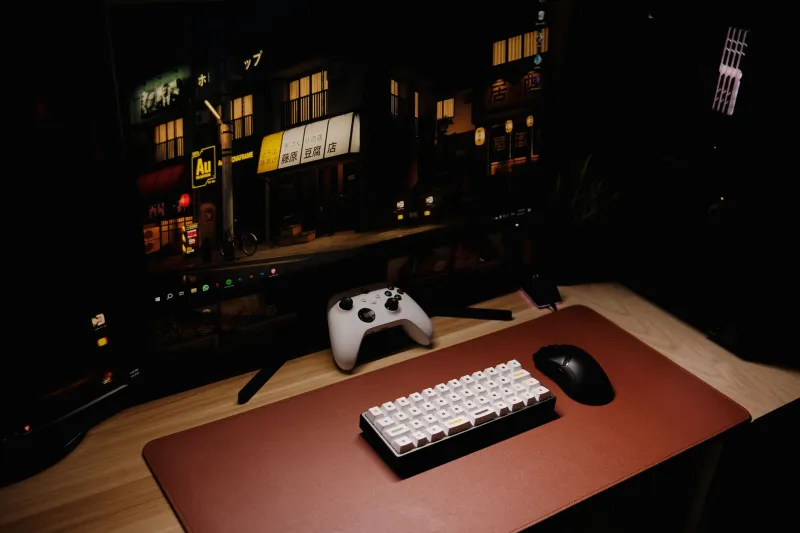
Somewhere in America right now, someone is losing a ranked match while sitting at a desk that costs more than a used car. Their monitor refreshes at 240Hz. Their mouse has seventeen programmable buttons and weighs less than a granola bar. Their headset has "spatial audio" that allegedly lets them hear footsteps through three walls and a prayer.
They are still losing. They will continue to lose. And tomorrow, they will research mechanical keyboards.
Welcome to gear fetishism — gaming culture's most expensive and least effective performance-enhancement strategy.
The Beautiful Lie the Industry Sells You
Let's be honest about what's happening here, because the gaming peripheral industry is very good at not being honest about it for you.
The marketing language is intoxicating. "Pro-grade." "Tournament-ready." "Zero latency." "Engineered for winners." Every product page is essentially a promise that the equipment will close the gap between you and someone who is actually good at the game. It's aspirational gear, sold to people who want to feel like athletes before they've done the training.
This is not a new trick. Athletic shoe companies have been doing it for fifty years. The difference is that a $200 running shoe at least gives your knees a slightly softer landing. A $200 gaming mouse gives you a slightly lighter click on the button you were going to click anyway, probably at the wrong time, in the wrong direction.
The gaming industry generated over $180 billion globally in recent years. A meaningful chunk of that is peripherals sold to people who are, statistically, average players who want to feel exceptional. The gear is the fantasy. The improvement was never really the product.
What the Pros Actually Started With
Here's where the gear mythology gets really uncomfortable: most professional gamers did not start with professional gaming equipment.
Shroud — Mike Grzesiek, one of the most celebrated FPS players in streaming history and a former CS:GO pro — has talked openly about grinding on mid-range setups for years before anyone was paying him to play. His skill wasn't installed with a firmware update. It was built through an almost inhuman volume of practice hours.
Ninja, before Fortnite made him a household name, was not playing on some custom-engineered dream rig. He was playing on whatever he had, getting better, and then buying better gear because he was already good — not as a prerequisite to becoming good.
This pattern repeats across competitive gaming almost universally. The gear follows the skill. It never precedes it.
Pro players do use premium equipment, and there are legitimate marginal benefits at the absolute elite level — a 1ms response time difference matters when you're competing at the highest level of a game where matches are decided by milliseconds. But you are not competing at that level. And if you were, you'd already know it, and someone else would be buying your peripherals.
The Psychology of the Upgrade Spiral
So why do we keep buying stuff?
Because buying is easier than improving, and our brains are not wired to distinguish between the two when the marketing is good enough.
Psychologists call it external attribution — the tendency to locate the cause of our failures outside ourselves. It's not that I made bad decisions in that firefight. It's that my mouse had too much input lag. It's not that I misread the board. It's that my chair was uncomfortable and I couldn't focus.
Gear gives us a story to tell ourselves that doesn't require us to confront the actual problem: that getting better at anything requires sustained, uncomfortable practice, and practice is boring and hard and doesn't come in a box with RGB lighting.
The upgrade spiral is self-perpetuating because each new purchase comes with a brief placebo boost. You feel sharper with the new mouse. You play with more confidence for a week. Then the confidence fades, the skill level reasserts itself, and suddenly the headset seems like the weak link.
Rinse. Repeat. The peripheral company's quarterly earnings look great.
Confidence Is the Cheat Code You're Ignoring
Here's the genuinely useful part, and we promise it won't cost you $400.
Research on expert performance — across sports, chess, music, and yes, competitive gaming — consistently points to a cluster of mental factors that separate high performers from everyone else. Confidence is near the top of every list. Not arrogance. Not delusion. Functional confidence: the belief that your current toolkit, whatever it is, is sufficient to handle the next challenge.
Players who perform well under pressure aren't doing so because their equipment is better. They're doing it because they've developed trust in their own decision-making. That trust is built through repetition, through reviewing mistakes without spiraling, and through deliberately practicing the scenarios that make them uncomfortable — not through purchasing their way to a feeling of readiness.
Strategy compounds in a way that gear never does. A player who genuinely understands the map, the meta, the opponent's tendencies, and their own decision patterns will beat a player with superior equipment almost every time. The exceptions are so rare they make highlight reels precisely because they're exceptions.
The Budget Setup Hall of Fame
Want a quick reality check? Some of the most dominant performances in competitive gaming history happened on setups that would make a modern gear enthusiast wince.
Early professional Street Fighter players were competing on arcade sticks that had been repaired with tape. Poker legends who reshaped the game learned on kitchen tables with chips from a box set. Indie game developers who built games that sold millions of copies did so on laptops that ran warm and sounded like a hair dryer.
The constraint didn't stop them. In some cases, the constraint helped — forcing them to develop skills and adaptations that players with premium setups never had to build.
What You Should Actually Spend Your Money On
If you've got disposable income and gaming is your thing, here's a genuinely useful hierarchy for where it makes a real difference:
A decent monitor with at least 144Hz — this one actually matters. Visual input matters.
A comfortable chair — not because it makes you better, but because back pain makes you worse, and you're going to be sitting there for hours.
Reliable internet — lag is real and it is the enemy.
Everything else? Mid-range is fine. Seriously. Spend the rest on game time, coaching, or just more hours in practice lobbies. That's where improvement actually lives.
The Gear Isn't the Problem. The Avoidance Is.
At Bong88 Rocks, we're not here to shame your setup. We're here to call out the comfortable lie that's keeping you from actually getting better.
Your mouse is probably fine. Your keyboard is probably fine. Your brain, however, is telling you a very convenient story about why you're not improving — and that story has a checkout cart attached to it.
The fastest upgrade you can make costs nothing. It's deciding that you're going to get better with what you have, right now, today.
Play hard. Win harder. No rules.